Why the Crowd Knows More Than the Expert
When Minds Unite
Truth Emerges
A Victorian cattle show. A lost nuclear submarine. A prime-time game show. Three stories separated by a century, all pointing to the same extraordinary truth. The crowd knows things no individual can. It is not magic. It is not luck. It is a documented, reproducible phenomenon. It is the very principle that LottoSync harnesses in the days before every EuroMillions draw.
Galton's Crowd
Prediction Accuracy
vs 65% Expert
Crowd Wisdom
The Ox That Changed Everything
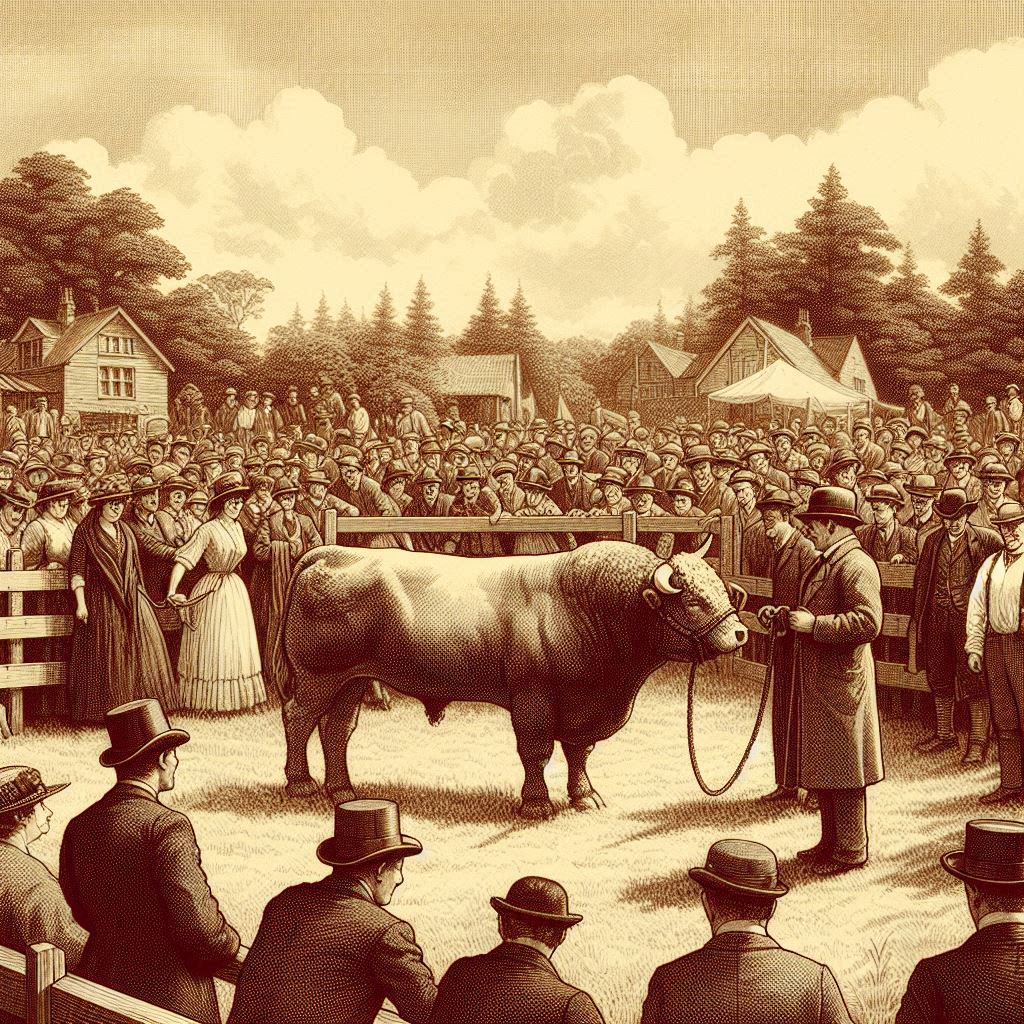
At the West of England Fat Stock and Poultry Exhibition, an ox stood in the show ring. Visitors were invited to guess its dressed weight after slaughter. 800 people entered their estimates. Some were farmers with decades of experience. Most were not.
Francis Galton, the Victorian polymath, collected all the slips expecting to prove that experts would far outstrip the common crowd. He was wrong. The median of all 800 estimates: 1,207 lbs. The ox's actual dressed weight: 1,198 lbs. A margin of error of less than one percent.
Galton published the result in Nature in 1907, astonished by what he called "the democratic judgment." Or as it is now known globally. The Wisdom of Crowds.
"The result seems more creditable to the trustworthiness of a democratic judgment than might have been expected."
— Francis Galton, Nature, 1907
Collective estimate vs actual weight, Plymouth 1906
Sonar simulation, North Atlantic, 1968
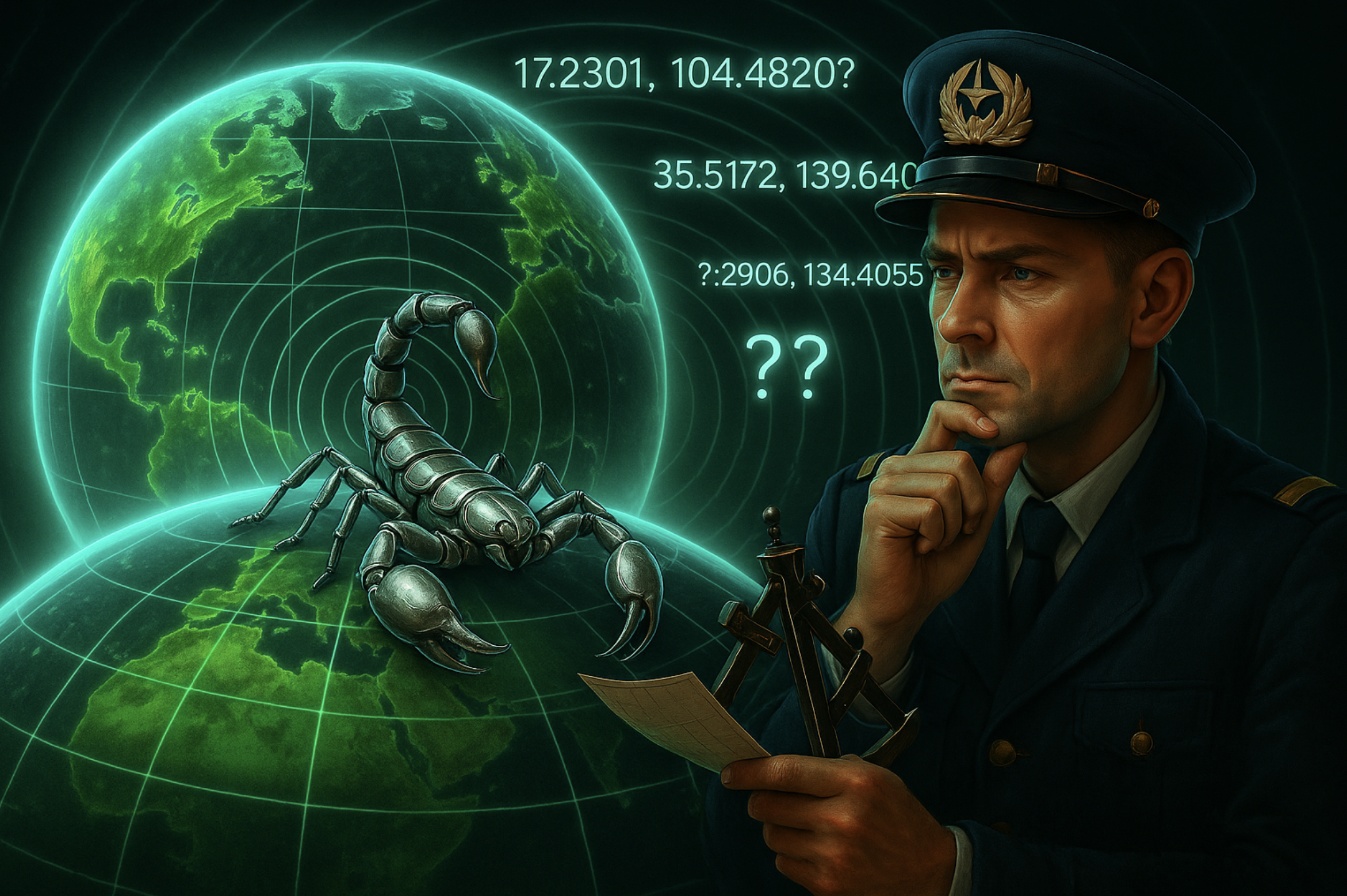
Finding the Scorpion
On 22nd May 1968, the USS Scorpion, a nuclear-powered submarine carrying 99 crew, vanished somewhere in the North Atlantic. The search area spanned thousands of miles of open Atlantic. No witnesses. No signals. No wreckage.
Naval officer John Craven assembled diverse specialists, mathematicians, submarine experts, salvage professionals, and collected their independent estimates using Bayesian probability. Crucially, no one was told what the others had guessed.
The Result
When the estimates were combined, they pointed to a single spot in empty ocean that no individual had chosen. Just 220 metres from where the Scorpion lay, in over 3,000 metres of water.
No individual expert came remotely close to where the submarine was actually found.
— James Surowiecki, The Wisdom of Crowds, 2004
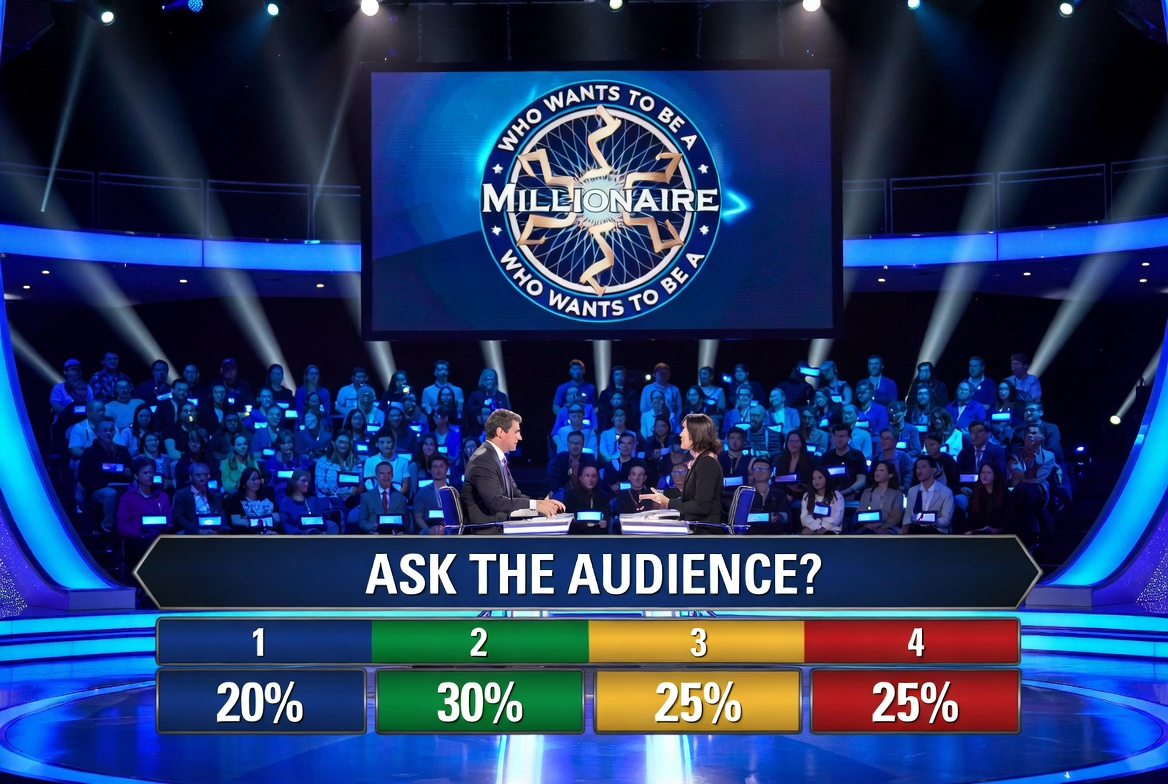
Ask The Audience
Who Wants to Be a Millionaire gave the world an unplanned laboratory for collective intelligence. Contestants could phone a single expert friend, or ask hundreds of studio strangers. The results were decisive and repeated across every country the format ran in.
Every vote cast in isolation. No huddles, no hints, no herd mentality. Just hundreds of independent minds arriving at their own truth.
Diversity
Hundreds of strangers with wildly different knowledge sets. One person's blind spot is another's specialist subject. Individual errors cancel out across the group.
What remained was something closer to truth than any single expert could produce. It wasn't a fluke. The same pattern repeated across every country the show ran in, across every series, across thousands of questions. The crowd was simply better. Not because any individual in it was exceptional, but because together they cancelled out each other's blind spots. Four precise conditions make this possible. When all four align, a crowd will outperform the best individual expert every time.
The Four Conditions
In The Wisdom of Crowds, Surowiecki identified exactly when and why collective intelligence works. Meet all four conditions, and a crowd will outperform even the best individual expert. Fail any one, and it collapses into groupthink.
Diversity of Opinion
Each person must bring private information or perspective. Identical minds produce identical errors, diversity is what makes cancellation of errors possible.
Independence
Opinions must not be shaped by those around them. Social influence creates cascades, one confident voice can corrupt an entire crowd's intelligence.
Decentralisation
People draw on local, specialist knowledge. The power comes from the distributed nature of the crowd, not from any central coordination or authority.
Aggregation
A mechanism must exist to turn private judgements into a collective decision. The intelligence is latent in the crowd, aggregation is what releases it.
If you put together a big enough and diverse enough group of people and ask them to make decisions affecting matters of general interest, that group's decisions will, over time, be better than the short list of experts would have come up with.
— James Surowiecki, The Wisdom of Crowds
Wisdom of Crowds at Peak Coherence
Every crowd you have read about on this page stumbled into its wisdom by accident. Galton's fairgoers were just killing time. The submarine hunters went home after one meeting. The Millionaire audience pressed a button and forgot about it.
LottoSync is the first experiment in history to ask a different question: what happens when the crowd arrives prepared? Every Synconaut submits their numbers after a precisely engineered Mindflow audio session — designed to dissolve analytical noise and open access to deeper intuitive signal. Not guessing. Arriving ready.
Princeton's PEAR laboratory ran controlled experiments for 28 years proving that focused human intention measurably influences random physical systems. Dean Radin PhD at the Institute of Noetic Sciences spent decades extending that work. His conclusion:
The evidence for mind-matter interaction is as strong as the evidence for many phenomena already accepted by mainstream science. The question is no longer whether these effects are real, but what they mean.
— Dean Radin PhD, Chief Scientist, Institute of Noetic Sciences
LottoSync is built on all four conditions of collective intelligence — but the Mindflow State adds a fifth dimension no prior study has ever tested: a crowd not merely independent, but coherent. Every submission is timestamped. Every result recorded. Every Wednesday night, the experiment runs.
Wisdom of Crowds at Peak Coherence
The LottoSync HypothesisQuestions Worth Exploring
Some questions don't have simple answers. That's what makes them worth asking.